Details
- Home
- Details
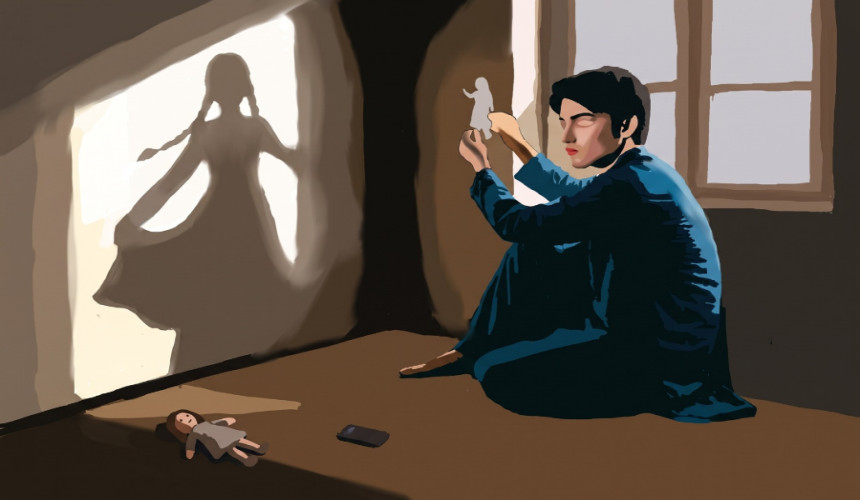
“What Would Happen If I Were Truly Myself?
Fatima Gul’s Account of a Life Lived in Fear and Concealment
In a society where diverse gender identities and sexual orientations are met with discrimination, judgment, and social rejection, many people are forced to hide their true identities to protect their safety. The story of Fatima Gul* reflects part of the lived experience of one such individual: a transgender woman who, from childhood, struggled between her inner feelings and the expectations of her family and society. For years, she carried a question in her mind, one whose answer was never easy to face: “What would happen if I were truly myself?”
Fatima Gul is a pseudonym. Certain identifying details in this story have been changed to protect her identity and ensure her safety.
“From early childhood, I had feminine behaviours and interests. I spent most of my time with girls, playing with them. During early adolescence, I felt confused about the difference between my inner sense of identity and the identity that my family and society had assigned to me. As I grew older, I gradually gained a clearer understanding of my feelings and interests. I realised that I felt emotional and romantic attraction towards boys.”
As Fatima Gul became more aware of her gender identity, her greatest concern was how her family and society would react. She says she lives in an environment where diverse gender identities are not recognised as part of human diversity but are instead regarded as “deviance.” According to her, even her own family members struggled to understand her identity and feelings.
For Fatima Gul, recognising her gender identity was an experience filled with both joy and fear: joy in discovering who she truly was, and fear of the consequences of revealing her identity to others.
“When I recognised myself as a trans woman, I experienced a strange mixture of fear and happiness. It is difficult to put those feelings into words. On the one hand, I felt happy because I was gradually discovering my true self. On the other hand, I was deeply worried about how I would face society.
I live in a traditional society where people’s gender identities are determined by the sex assigned to them at birth, and the identities of people like me are not recognised. Even my family could not understand my feelings and identity, let alone the wider society. This was a constant source of anxiety for me. I would often ask myself: If one day I decide to live according to my true identity, what will happen? Will I have to pay for being myself with humiliation, rejection, and judgment?”
Between Who They Wanted Me to Be and Who I Am
Fatima Gul describes living between two conflicting realities: the identity she experienced within herself and the expectations imposed on her by her family and society. According to her, from an early age, her family tried to control her behaviour and interests, expecting her to conform to the gender roles they considered appropriate. These family pressures, combined with the fear of judgment and social rejection, made her life increasingly difficult.
“From my earliest childhood, my family tried to control my behaviour and even my interests. They constantly reminded me that I was a man and should not behave like a woman. At that time, however, they did not know for certain about my gender identity.
Part of my personal life came to light when my family discovered my secret romantic relationship with a man. We would meet from time to time and shared a close relationship. When my family found out about it, the pressure and control they exerted over my life intensified.
That period was one of the darkest times of my life. The secret I had spent years fearing would be exposed had finally come out, not only to my family but also, to some extent, to my relatives and the wider community. From then on, I faced not only the fear of judgment and humiliation but also increasing family pressure and the threat of forced marriage. I was caught between wanting to live as my true self and being forced to follow the expectations and standards imposed by my family and society.”
According to Fatima Gul, her family believed that forcing her to marry would prevent social judgment and disgrace and demonstrate to others that she was living in accordance with their gender expectations. However, for Fatima Gul, the marriage was not the result of a free choice but rather an extension of the pressures she had endured for years. Against her will, she entered a marital life that her family had arranged for her.
“My family forced me to marry because they believed it would silence people’s criticism and prove to others that I was a man. I had no interest in or desire to marry a woman, and the decision was made entirely against my will. I now have three sons and two daughters as a result of that forced marriage.”
Experiencing Violence and the Violation of Human Dignity
In environments where diverse gender identities are met with discrimination, rejection, and violence, transgender people may face serious risks of abuse, threats, and human rights violations. Fatima Gul’s experience reflects these vulnerabilities. She has endured severe acts of violence that have had profound effects on her physical and mental health, as well as her sense of safety.
“The first act of violence I experienced occurred in 1395 [2016–2017]. That day, four men first stole my phone and then gang-raped me, recording a video of the assault. Afterwards, they beat me severely and threatened to kill me. It was one of the most painful and traumatic experiences of my life.
Beyond the sexual and physical violence, the recording of the assault and the subsequent threats of torture and death left me overwhelmed with fear and anxiety. I constantly worried that the video would be circulated among people. The thought of it being exposed became a recurring nightmare that haunted me almost every night.
“In 1402 [2023–2024], I was raped again, this time by an influential member of the Taliban. They held me for a day and a night, during which I was given neither food nor water.”
Living Under the Shadow of Fear and Threats
According to Fatima Gul, the consequences of the violence and threats she has experienced continue to affect her daily life, sense of safety, and social relationships. She speaks of living with constant fear, finding it difficult to trust others, and having to limit her social interactions and movements.
“I have received repeated calls from different numbers, with callers threatening to kill me. These constant threats have made my life extremely difficult and exhausting. I live in continuous fear, always worried that the threats will be carried out and that my life may be in danger. I feel completely unsafe, as though death could come at any moment.
The violence, torture, and threats I have experienced have seriously affected my mental and psychological well-being. I live with constant fear, anxiety, and distress. The painful memories keep coming back, and I cannot simply forget what happened. I struggle to sleep at night and rarely feel safe. Every time my phone rings, my heart starts racing, and my breathing becomes faster, as though something terrible is about to happen.
These experiences have also affected my social life. I am constantly afraid of being judged, humiliated, or rejected by my family and society. To avoid facing such experiences again, I have restricted my movements and gradually lost my trust in people. I have become afraid of others and no longer feel safe around them.”
The violence and threats have affected not only Fatima Gul’s physical and mental health but also her professional life and financial situation. According to her, the psychological distress resulting from these experiences, along with humiliating treatment in the workplace, made it increasingly difficult for her to continue working. Ultimately, these challenges led to the loss of her job and source of income.
Reflecting on these challenges, she says:
“These experiences and their consequences have had a serious negative impact on my working life and financial situation. Because of my psychological distress, constant fear, and lack of a sense of security, I have struggled to concentrate and carry out my daily activities. In addition, humiliating treatment in the workplace eventually led to the loss of my job. As a result, I lost my source of income and financial independence, and my economic difficulties increased.
“Taken together, these experiences have affected every aspect of my life, causing serious physical, psychological, social, and economic harm. I feel that my opportunity to live a normal, independent, and secure life has been taken away from me.”
Hoping for a Free Life with Dignity
“I hope the day will come when I can leave this difficult situation behind, live freely and with dignity, and be among people without constantly feeling afraid or worried.”
At the end of this story, the question that has occupied Fatima Gul’s mind for years remains unanswered: “What would happen if I were truly myself?”
Fatima Gul’s experiences illustrate how discrimination and rejection based on gender identity can expose individuals to violence, threats, forced marriage, and social and economic exclusion. In seeking to live in accordance with her true identity, she has faced risks that no human being should ever have to endure.
The right to safety, human dignity, and a life free from violence are fundamental human rights. Access to these rights should never depend on concealing or denying one’s gender identity. Fatima Gul’s wish is no more than what every human being deserves: to live freely and with dignity, without fear of discrimination, violence, or social rejection.